


Sorry I’ve been away. There’s, uh, a lot going on. The Guardian asked me for an op-ed on what the Dems’ midterm tsunami means for AI. On Monday, I went into the DC CNN studio to discuss the geopolitical stakes and wild implications of Jensen Huang’s spy affair. Pre-taping also gave me a chance to meet some newly elected congresspersons in a more informal setting—who were definitely not your typical career politicians. I went back on CNN on Wednesday where I got a chance to react to the news that Huang resigned and contextualize what this means for the Trump administration (not looking good!). Did back to back Breaking Points segments, covering Huang and the AI implications of Democratic leadership votes. In between, I was digging into Nvidia’s unorthodox lobbying strategy with Ashley Gold and Rohan Goswami, with great edits from Shelly Banjo and additional reporting for Reed Albergotti. I’m pleased with where we landed!
The Scoop
In January, the general counsel for what was then the world’s most valuable company delivered a blunt directive on chip export controls to more than a dozen government officials: What Donald Trump and his friend Jensen Huang want, goes.
“I was with the president when he and Jensen discussed this so I want to let you know what the president wanted,” said Nvidia’s Tim Teter, according to people with access to a detailed account of the call. “He wants this to go fast.”
People on the call fell silent.
At issue were proposed conditions on licenses to export Nvidia’s H200 chips to China, which included requirements that chipsellers know who their cloud customers were before shipping and conduct know-your-customer checks on any buyers purchasing more than a few thousand chips.
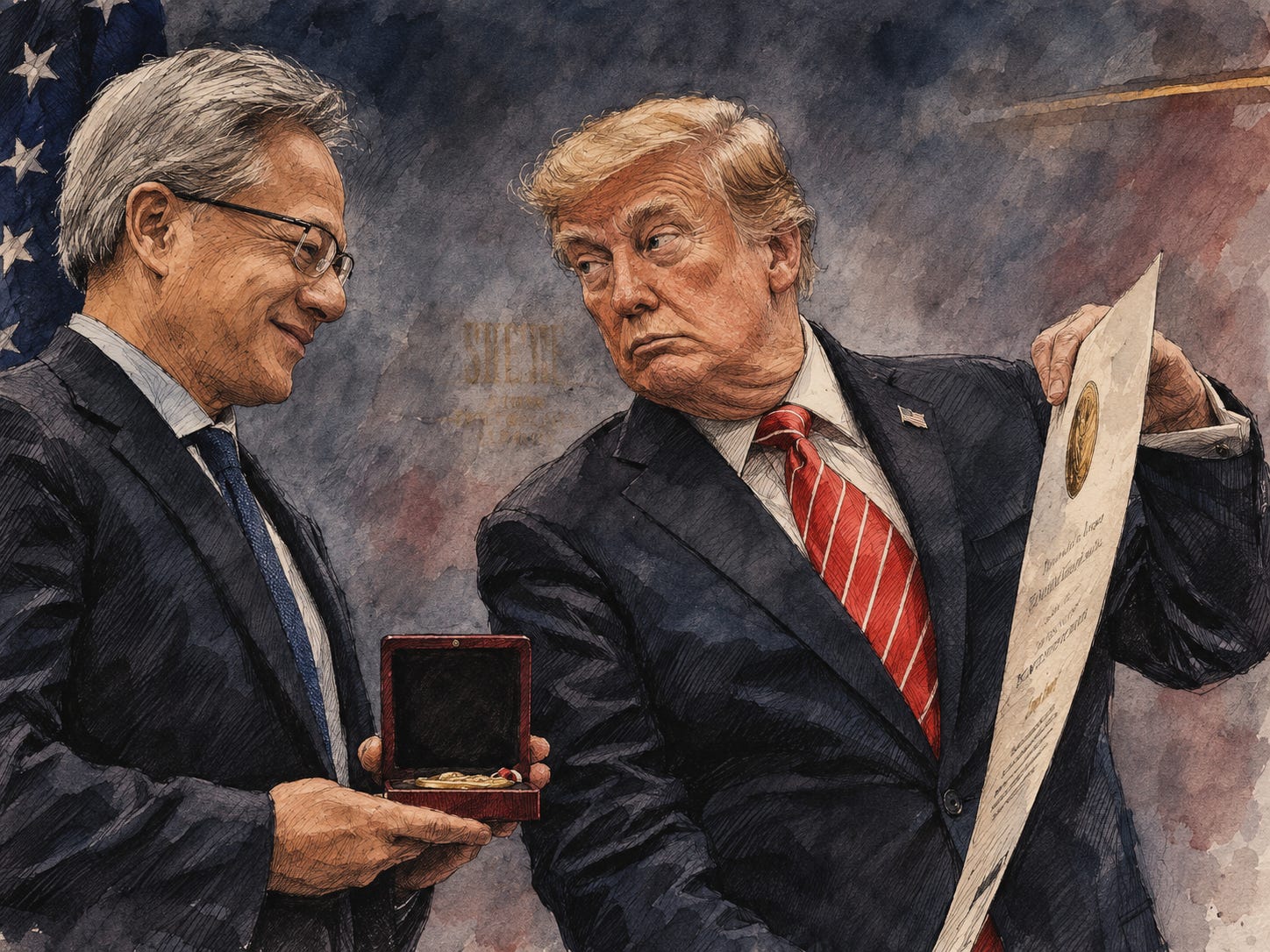
Nvidia objected, with Teter calling the cloud-customer requirement a “poison pill” for the company, the people said. Nvidia also wanted the threshold for the know-your-customer checks to be in the tens of thousands (the equivalent of billions of dollars of chips) and pushed for end-of-life conditions to only apply to chips that were facing export controls. While it’s not unusual for big corporations to work with US government agencies and Congressional staffers on legislation or agency rulemaking, or even to see draft regulation in advance, people familiar with Nvidia and its former CEO’s Washington connections say the chipmaker wielded an unprecedented level of influence in shaping guidelines with far-reaching global security and business implications for the entire industry. The previously unreported discussions have only taken on greater significance since Huang stepped down from the company he co-founded decades ago after media reports of extramarital affairs with two subordinates and one with a customer and suspected Chinese spy.
Nvidia declined to comment. Spokespeople for the White House didn’t immediately respond to requests for comment.
A spokesperson for the Bureau of Industry and Security, which is housed within the Department of Commerce, said it was “completely routine” for the department and other agencies to work with individual companies in this manner and that “often the conditions change in response to legitimate commercial considerations” raised by corporations. The final version of all license conditions are reviewed by the state, defense, energy, and commerce departments.“Nvidia would have gone through the same process for license conditions as any other license applicant. Nvidia consulting with non-political experts at multiple US government agencies regarding its proposed changes to the conditions is consistent with standard practice,” the spokesperson said…
And if you haven’t yet, consider buying a copy of Obsolete! If you’re not sold, check out this totally organic (no, really, I swear!) discussion of how much people have enjoyed it.